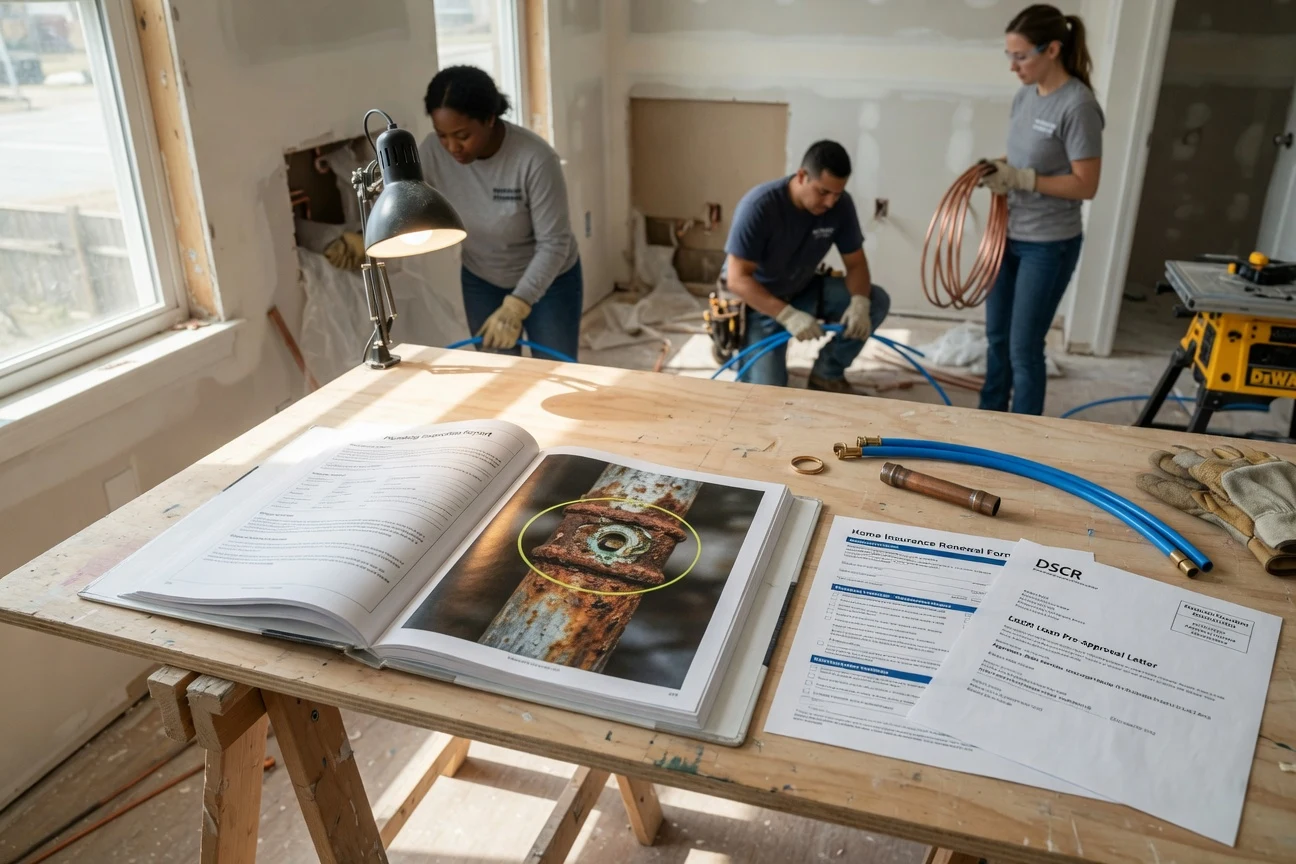
A Nashville flip with old galvanized supply lines may still have running water. A rental with polybutylene may not be leaking today. A water heater may still fire even though it is past service life. But insurance underwriting, appraisal conditions, DSCR loan review, and buyer inspections can all react before a pipe actually fails.
If you use hard money, DSCR loans, conventional refinance, or landlord insurance, plumbing condition belongs in the financing model.
Why Plumbing Shows Up in Financing
Plumbing affects collateral condition. Lenders care whether the property is safe, habitable, insurable, and marketable. Insurers care whether the property has a high probability of water damage.
That is why the following items can create friction:
- Polybutylene supply pipe
In Nashville, these issues often show up in older Davidson County properties and 1980s-1990s suburban inventory.
2026 Cost and Risk Table
The cost is only half the problem. The timing can be worse. A repair condition one week before closing can wreck your capital stack.
DSCR Loans and Rental Condition
DSCR lenders underwrite income, but they still care about property condition and insurance. The rental needs to be insurable and suitable as collateral.
#
Common review triggers
Plumbing problems can affect DSCR execution when:
- The appraisal notes deferred maintenance.
For BRRRR investors, keep plumbing invoices, permits, inspection approvals, and sewer camera footage. A clean documentation package helps prove the property is stabilized.
Hard Money Loans
Hard money lenders may fund distressed properties, but plumbing surprises still matter. If the rehab budget misses a $12,000 sewer lateral, your draw schedule and completion timeline suffer.
Hard money is expensive capital. Delays cost money every day.
If the lender requires work completion before final draw or refinance, unresolved plumbing can trap equity in the project.
Conventional Buyers and FHA/VA Sensitivity
When you sell a flip, the buyer's financing matters. FHA and VA transactions can be more sensitive to health, safety, and functionality items.
Plumbing items that can trigger repair requests:
- Leaking water heater
Conventional buyers can still negotiate aggressively based on inspection reports. A buyer's inspector does not need to kill the loan to cost you money. They just need enough findings to ask for a credit.
Insurance: Polybutylene and Galvanized
Insurers vary, but the trend is clear: older and failure-prone plumbing materials get more scrutiny.
Polybutylene is a known underwriting concern because of historical failure patterns. Even if a carrier writes the policy, a future claim involving old pipe can become a documentation fight.
Galvanized pipe is different. The issue is corrosion and age. A sudden burst may create covered water damage, but insurers generally do not pay to replace the corroded pipe itself. Long-term seepage and neglected corrosion can create claim problems.
For investors, the answer is documentation and proactive replacement when the math supports it.
Nashville-Specific Financing Notes
East Nashville pre-war homes can appraise well after renovation, but old cast iron or galvanized left behind creates inspection risk.
Antioch and Madison properties may be attractive rentals, but slab and sewer issues need to be known before DSCR refinance.
Brentwood, Green Hills, and Franklin buyers expect mechanical systems to match premium finishes. Old plumbing behind expensive tile can become a credibility problem.
Murfreesboro rentals may face fewer old-material issues, but water heater, PRV, and fixture failures still affect rent-ready condition.
Documentation Package for Investors
Keep:
1. Plumbing estimate used for acquisition.
This package helps you with lenders, insurers, buyers, property managers, and future sale disclosures.
Repair Before Financing or After?
Repair before financing when:
- The issue affects habitability.
Defer only when:
- The issue is minor and documented.
Plumbing is rarely cheaper after tenants move in.
The Investor Communication Rule
Tell your lender and insurer what was corrected, not just what was wrong. "Polybutylene present" is a red flag. "Polybutylene fully replaced with permitted PEX-A, pressure-tested, and documented" is a different underwriting conversation. Same property, different risk story.
This also helps when you sell the property later. A buyer's inspector may still mention that older pipe used to be present, but your file should show the replacement scope, date, material, and permit path. That turns a negotiation item into a documented improvement.
Bottom Line
Plumbing condition affects more than repair budget. It can affect whether the property insures cleanly, refinances cleanly, appraises without conditions, and sells without retrades.
If your Nashville deal has polybutylene, galvanized, sewer defects, gas changes, or water heater problems, price the financing risk too. Call Luke Lays Pipe at (734) 748-4831 for a plumbing condition review before your lender, insurer, or buyer finds the problem first.
Questions About Your Nashville Project?
Luke Lays Pipe provides flat-rate plumbing for Nashville house flips and investors — repiping, sewer repair, water heaters, and more.
Get a Free Quote
Flat-rate pricing for Nashville flips and investors.
(734) 748-4831 Send a Quote RequestInvestor Tool
Flip Plumbing Cost Calculator
Estimate repiping, sewer, water heater, and permit costs before you make an offer — built for Nashville investors.
Estimate My Budget →