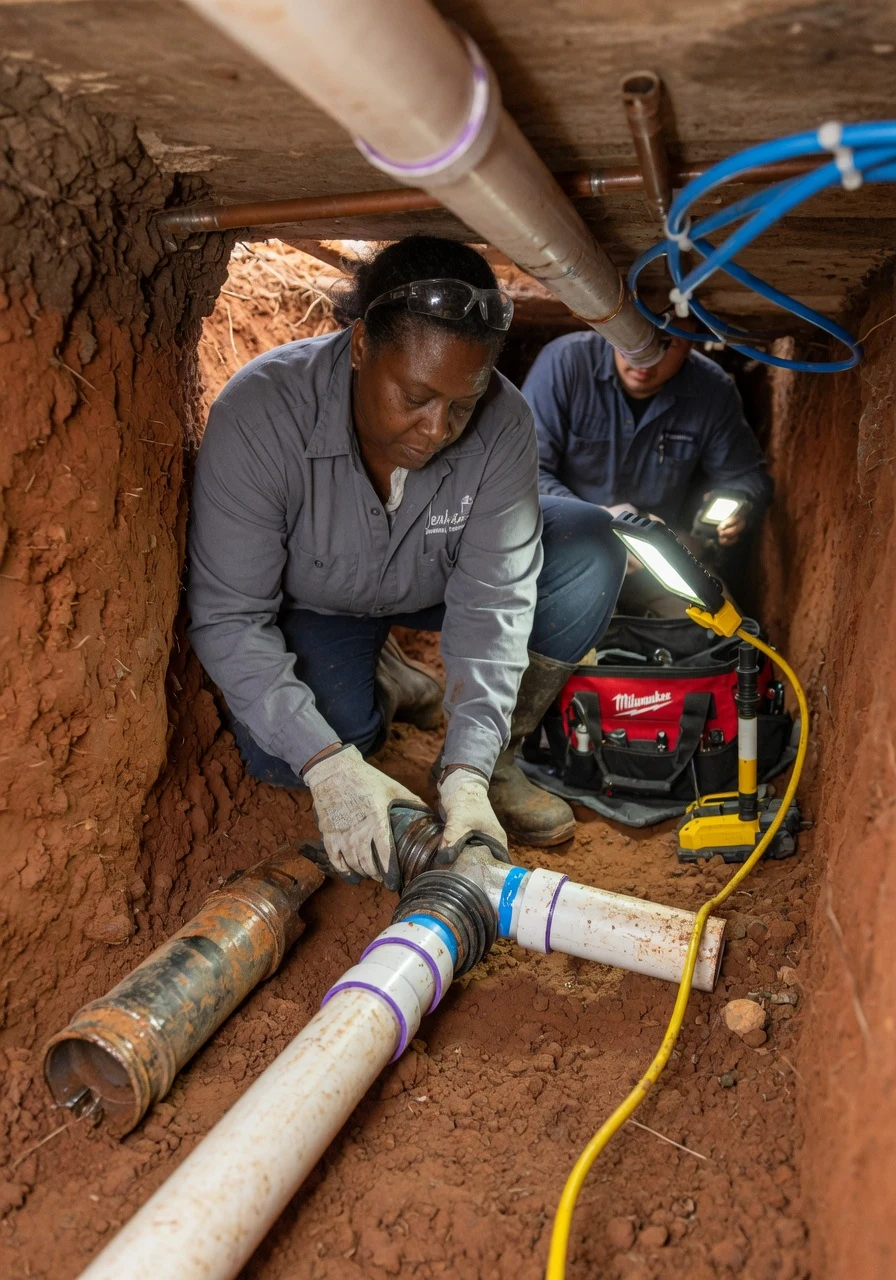
When plumbing runs below concrete, you have two basic approaches: open-cut from above or tunnel from the side. Sometimes you can reroute supply lines through walls or attic spaces. Drain lines are harder because slope controls everything.
The right answer depends on pipe location, depth, flooring, cabinets, structural conditions, and whether the property is occupied.
Why Antioch and Madison See Slab Issues
Antioch has a lot of 1970s-1990s slab construction. Those houses can be good rentals and flips, but the plumbing is often buried in concrete paths that are expensive to access.
Madison has more mixed construction, including crawlspaces, slabs, and additions. Older drain materials, clay soils, and renovation layers can create under-slab surprises.
Nashville's expansive clay soil adds movement. When the soil below or around the slab shifts, rigid drain lines can settle, separate, or belly. Supply lines can also fail, especially if older materials or poor installation are present.
Symptoms Investors Should Not Ignore
Look for:
- Warm spots on flooring
Any of these should trigger leak detection or sewer camera work before close.
2026 Under-Slab Cost Table
Restoration can be a separate cost: flooring, cabinets, tile, drywall, and concrete finishing.
Open-Cut Repair
Open-cut means cutting the slab from inside the house, excavating down to the pipe, repairing or replacing the line, inspecting, backfilling, patching concrete, and restoring finishes.
Advantages:
- Direct access
Disadvantages:
- Destroys interior finishes
For flips already in demo, open-cut often makes sense. If the house is vacant and floors are coming out, do the pipe now.
Tunneling Repair
Tunneling means excavating from the exterior and digging under the slab to reach the failed pipe. The goal is to avoid cutting finished interior floors.
Advantages:
- Preserves tile, cabinets, and interior finishes
Disadvantages:
- Higher excavation cost
Tunneling can be the right call for a finished rental in Brentwood or a Madison house with new flooring. It is often overkill for a gutted Antioch flip.
Supply Leak vs Drain Failure
Supply leaks and drain failures are different jobs.
#
Supply Leak
If a hot or cold line under the slab leaks, we often prefer rerouting overhead or through walls instead of repairing the exact buried section. A reroute avoids leaving other old under-slab supply lines in service.
#
Drain Failure
Drain lines need slope. You cannot simply route them anywhere. A belly, break, or collapsed under-slab drain may require excavation to restore grade.
That is why drain problems are usually more expensive than supply reroutes.
Investor Decision Table
Due Diligence Before Closing
Before buying a slab property in Antioch or Madison:
1. Run all fixtures for 15-20 minutes. 2. Watch for backups at tubs and showers. 3. Check the water meter with all fixtures off. 4. Ask for water bills. 5. Camera the sewer/drain line when age or symptoms justify it. 6. Identify supply material. 7. Look for flooring patches that may hide previous repair. 8. Check permit history if major plumbing was recently done.
Do not accept "the seller says it drains fine" as due diligence.
How This Hits the Flip Budget
Under-slab repairs affect more than plumbing cost. They affect schedule, flooring, cabinets, tile, cleaning, and inspection timing.
If you discover the problem after new floors are installed, you pay twice: once to install and once to remove.
If you find it during due diligence, you can negotiate or walk.
Occupied Rental Considerations
If the property is occupied, add tenant displacement to the math. Open-cut work can remove bathroom access, create dust, and require flooring removal. A tunnel may cost more on paper but keep rent flowing and reduce tenant conflict. For a vacant flip, I usually care more about total project cost. For a stabilized rental, I care about cost, downtime, and habitability at the same time.
Also verify insurance before opening a slab. Some policies treat long-term seepage, failed pipe, and resulting water damage differently. Documentation from leak detection, camera work, and licensed repair invoices helps if the claim becomes a dispute.
Bottom Line
Under-slab plumbing issues in Antioch and Madison are manageable when priced early. They become painful when discovered after finishes or after a tenant moves in.
For Nashville slab homes, camera drains, check the meter, and take symptoms seriously. The right repair may be open-cut, tunneling, or reroute, but the decision needs to be made with real site information.
Call Luke Lays Pipe at (734) 748-4831 before closing on an Antioch or Madison slab property with plumbing symptoms. We will help you separate a manageable repair from a deal-changing one.
Questions About Your Nashville Project?
Luke Lays Pipe provides flat-rate plumbing for Nashville house flips and investors — repiping, sewer repair, water heaters, and more.
Get a Free Quote
Flat-rate pricing for Nashville flips and investors.
(734) 748-4831 Send a Quote RequestInvestor Tool
Flip Plumbing Cost Calculator
Estimate repiping, sewer, water heater, and permit costs before you make an offer — built for Nashville investors.
Estimate My Budget →